

Injectables · 3 min read
Botox vs Dermal Fillers: Difference Between Botox and Filler
Confused about Botox and dermal fillers? Learn the key differences, how each treatment works, what concerns they treat and which option may be right for your aesthetic goals.
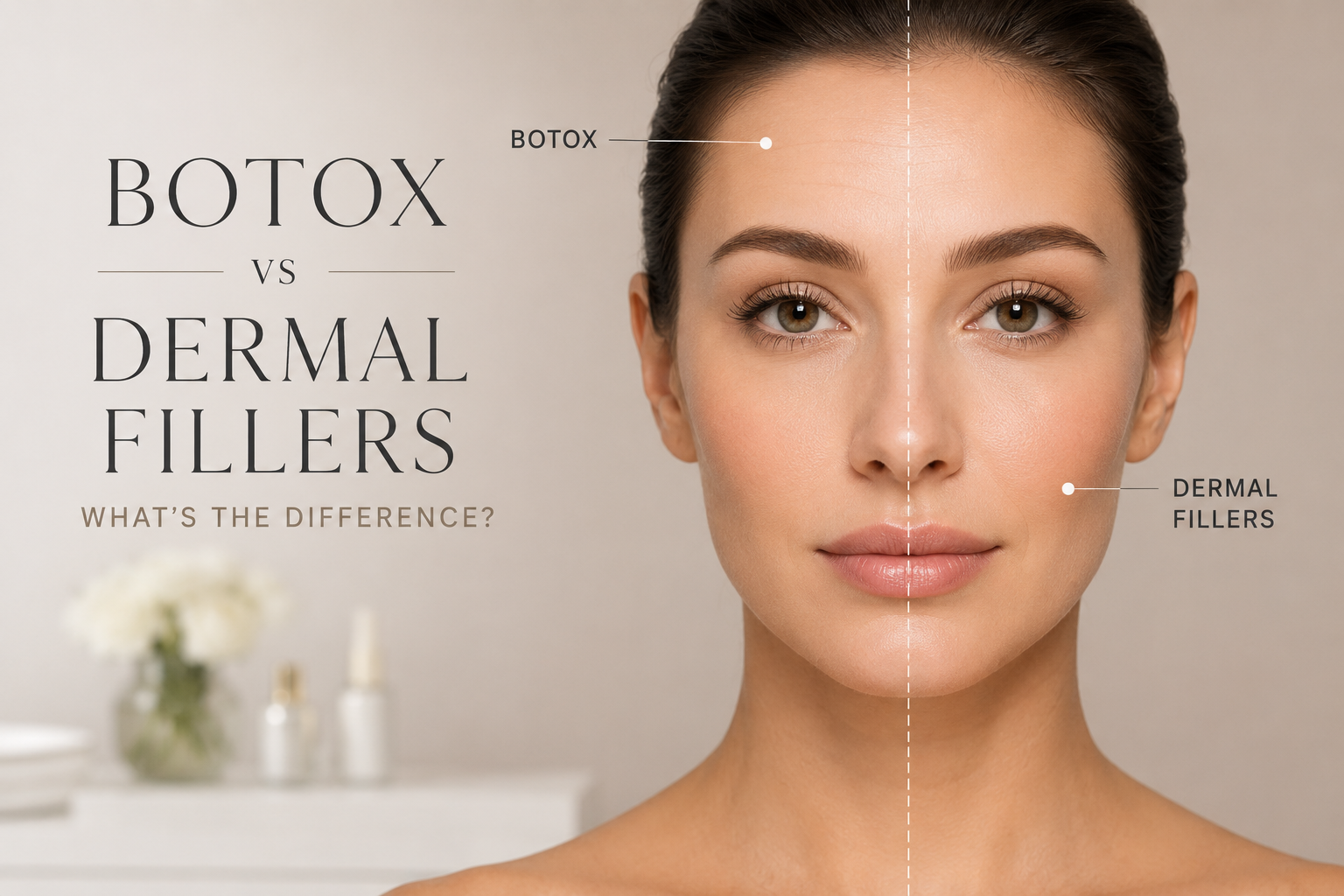
Botox and dermal fillers are two of the most popular non-surgical aesthetic treatments available today. While they are often grouped together, they work in very different ways and are designed to address different concerns.
Understanding the difference between Botox and dermal fillers can help you make informed decisions about your aesthetic journey and choose treatments that align with your goals.
What Is Botox?
Botox is a prescription medicine that temporarily relaxes specific facial muscles responsible for creating expression lines.
Over time, repeated facial movements such as smiling, frowning and squinting can lead to the formation of dynamic wrinkles. Botox helps reduce muscle activity in these areas, resulting in a smoother and more refreshed appearance.
Common treatment areas include:
- Forehead lines
- Frown lines
- Crow’s feet
- Bunny lines
- Chin dimpling
- Neck bands
Botox is often used both to soften existing wrinkles and help prevent deeper lines from developing.
What Are Dermal Fillers?
Dermal fillers are injectable gels, most commonly made from hyaluronic acid, a substance naturally found in the skin.
Unlike Botox, dermal fillers do not affect muscle movement. Instead, they restore volume, enhance facial contours and improve facial proportions.
Dermal fillers are commonly used to:
- Restore volume loss
- Enhance lips
- Define the jawline
- Improve chin projection
- Lift the cheeks
- Soften facial folds
The goal is to create balanced, natural-looking results while maintaining facial harmony.
How Does Botox Work?
Botox works by temporarily interrupting the signals between nerves and muscles.
When the targeted muscle relaxes, the skin above it becomes smoother and wrinkles become less noticeable.
Results typically begin to appear within a few days and continue to develop over approximately two weeks.
Most patients enjoy results for around three to four months before maintenance treatment may be required.
How Do Dermal Fillers Work?
Dermal fillers work by restoring volume beneath the skin.
They can:
- Replace age-related volume loss
- Improve facial contours
- Support facial structures
- Enhance specific facial features
Results are visible immediately after treatment, although mild swelling may temporarily affect the final appearance.
Depending on the product used and treatment area, results can last between six and eighteen months.
Botox vs Dermal Fillers: Key Differences
Although both treatments can create a more youthful appearance, they address different concerns.
Botox
Botox is best suited for:
- Dynamic wrinkles
- Expression lines
- Forehead lines
- Crow’s feet
- Frown lines
Dermal Fillers Dermal fillers are best suited for:
- Volume loss
- Facial contouring
- Lip enhancement
- Hollow cheeks
- Deep folds and creases
- Facial balancing
In simple terms: Botox relaxes muscles.
Dermal fillers restore volume.
Which Treatment Lasts Longer? Botox or Fillers?
Botox and dermal fillers have different longevity profiles.
Botox generally lasts:
- 3–4 months
Dermal fillers generally last:
- 6–18 months
The exact duration varies depending on the individual, treatment area and product used.
Can Botox and Dermal Fillers Be Combined?
Yes.
Many patients achieve the best results through a combination approach.
For example:
- Botox may soften forehead and frown lines.
- Dermal fillers may restore volume in the cheeks or enhance the lips.
Because the treatments address different aspects of facial ageing, they often complement each other very effectively.
Which Treatment Is Right for You?
The most suitable treatment depends on your concerns and desired outcome.
Botox may be appropriate if your primary concern is:
- Forehead lines
- Frown lines
- Crow’s feet
- Prevention of dynamic wrinkles
Dermal fillers may be appropriate if your primary concern is:
- Volume loss
- Facial contouring
- Lip enhancement
- Deep folds and creases
A personalised consultation can help determine the most suitable treatment plan based on your facial anatomy and aesthetic goals.
Final Thoughts
Although Botox and dermal fillers are often discussed together, they perform very different functions. Botox helps reduce muscle-related wrinkles, while dermal fillers restore volume and enhance facial contours.
Understanding these differences can help you choose the right treatment and achieve natural-looking results that complement your features.
Considering Botox or Dermal Fillers?
At Privé Skin Clinic, we take a personalised approach to aesthetic medicine.
Whether you are considering Botox, dermal fillers or a combination of treatments, our team can create a tailored treatment plan designed around your individual goals.
Book a consultation with Privé Skin Clinic in Knightsbridge to discuss the most suitable treatment options for you.
Frequently asked questions
What is the main difference between Botox and dermal fillers?
Botox works by temporarily relaxing muscles that cause expression lines and wrinkles, while dermal fillers restore lost volume, enhance facial contours and smooth deeper folds. Botox treats muscle-related wrinkles, whereas fillers address volume loss and facial structure.
Is Botox better than dermal fillers?
Neither treatment is inherently better. Botox is typically more suitable for forehead lines, frown lines and crow’s feet, while dermal fillers are often used to restore volume, enhance facial features and improve facial contours. The most appropriate treatment depends on your individual concerns and goals.
Can Botox and dermal fillers be used together?
Yes. Botox and dermal fillers are frequently combined as part of a personalised treatment plan. Botox can soften dynamic wrinkles while dermal fillers restore volume and improve facial proportions, creating balanced and natural-looking results.
Which lasts longer, Botox or dermal fillers?
Botox generally lasts around three to four months, while dermal fillers can last between six and eighteen months depending on the product used, treatment area and individual factors.
Do Botox and dermal fillers look natural?
When performed appropriately, both Botox and dermal fillers can produce natural-looking results. The goal is to refresh and enhance facial appearance while maintaining natural facial expression and harmony.
At what age should I start Botox or dermal fillers?
There is no specific age at which treatment should begin. Some individuals choose Botox preventatively in their late twenties or thirties, while others seek treatment later to address visible signs of ageing. Dermal fillers are typically used when volume loss or facial contour changes become a concern.
Are Botox and dermal fillers safe?
Botox and dermal fillers have established safety profiles when administered by appropriately qualified medical professionals. A thorough consultation should always be carried out to determine suitability and discuss potential risks and benefits.
How do I know whether I need Botox or dermal fillers?
How do I know whether I need Botox or dermal fillers?
Mentioned in this article
Related treatments


Keep reading

Science
How Polynucleotides Repair Your Skin
Discover how polynucleotides repair your skin by stimulating natural regeneration, collagen production and healthier, more youthful-looking skin.

Weight Management
Mounjaro for Weight Loss UK: Complete Patient Guide | Privé
Considering Mounjaro for weight loss? Discover how it works, who it’s suitable for, expected results, side effects and everything you need to know before starting treatment with expert clinician-led guidance from Privé.
From the clinic
Considering a consultation?
Thirty minutes, complimentary, at our Knightsbridge clinic. We listen first, recommend honestly, and only suggest treatment when it's right for you.