

Science · 9 min read
How Polynucleotides Repair Your Skin
Discover how polynucleotides repair your skin by stimulating natural regeneration, collagen production and healthier, more youthful-looking skin.
How Polynucleotides Repair Your Skin: The Science Behind Natural Regeneration
Introduction
As we age, our skin’s natural ability to repair and regenerate gradually slows. Collagen and elastin production begins to decline, skin cells renew more slowly and the visible signs of ageing—such as fine lines, reduced firmness, dehydration and loss of elasticity—become increasingly noticeable. While many aesthetic treatments focus on improving the skin’s appearance, polynucleotide treatments take a different approach by supporting the skin’s own natural repair processes beneath the surface.
Polynucleotides have become one of the most significant advances in regenerative aesthetic medicine, helping to stimulate skin regeneration rather than simply treating visible symptoms. By encouraging cellular repair, supporting fibroblast activity and promoting collagen production, they help improve skin quality, hydration and resilience over time. In this article, we’ll explore how polynucleotides work, the science behind natural skin regeneration and why polynucleotide treatments are transforming modern skin rejuvenation.
What Are Polynucleotides?
Polynucleotides are highly purified DNA fragments used in regenerative aesthetic medicine to stimulate the skin’s natural repair and regeneration processes. In aesthetic treatments, polynucleotide injections help improve skin quality by encouraging cellular renewal rather than simply masking the visible signs of ageing. By supporting the skin’s own biological repair mechanisms, they promote healthier, stronger and more resilient skin over time.
Most medical-grade polynucleotides used in aesthetic medicine are derived from highly purified salmon DNA because of its excellent biocompatibility with human tissue. Following extensive purification, these DNA fragments are transformed into sterile injectable products that support tissue repair, reduce inflammation and create an optimal environment for skin regeneration. Rather than adding volume or altering facial movement, polynucleotide treatments work by enhancing the skin’s natural ability to heal itself.
 Once injected into the skin, polynucleotides stimulate fibroblasts—the specialised cells responsible for producing collagen, elastin and other essential components of the extracellular matrix. As these cells become more active, the skin gradually produces more collagen, improves hydration, strengthens its protective barrier and becomes firmer, smoother and healthier. This regenerative process continues for several weeks after treatment, allowing improvements to develop naturally over time.
Unlike dermal fillers or anti-wrinkle injections, which address specific aesthetic concerns such as volume loss or muscle movement, polynucleotides focus on improving the overall health and function of the skin itself. Their ability to support long-term skin regeneration has made them one of the most advanced innovations in modern aesthetic medicine, with applications ranging from facial rejuvenation and delicate under-eye treatments to scar improvement, neck rejuvenation and overall skin quality enhancement.
Why Does Skin Lose Its Ability to Repair Itself?
Healthy, youthful skin is constantly repairing itself. Every day, specialised skin cells replace damaged tissue, fibroblasts produce fresh collagen and elastin, and the extracellular matrix maintains hydration, structure and resilience. When we are young, this regenerative process happens efficiently, allowing the skin to recover quickly from environmental stress, UV exposure and natural wear.
As we age, however, these natural repair mechanisms begin to slow. Fibroblasts become less active, collagen and elastin production gradually decline, and the skin’s ability to retain moisture and repair microscopic damage becomes less efficient. At the same time, repeated exposure to ultraviolet (UV) radiation, pollution, oxidative stress and inflammation accelerates cellular ageing, leading to the gradual breakdown of healthy skin tissue.
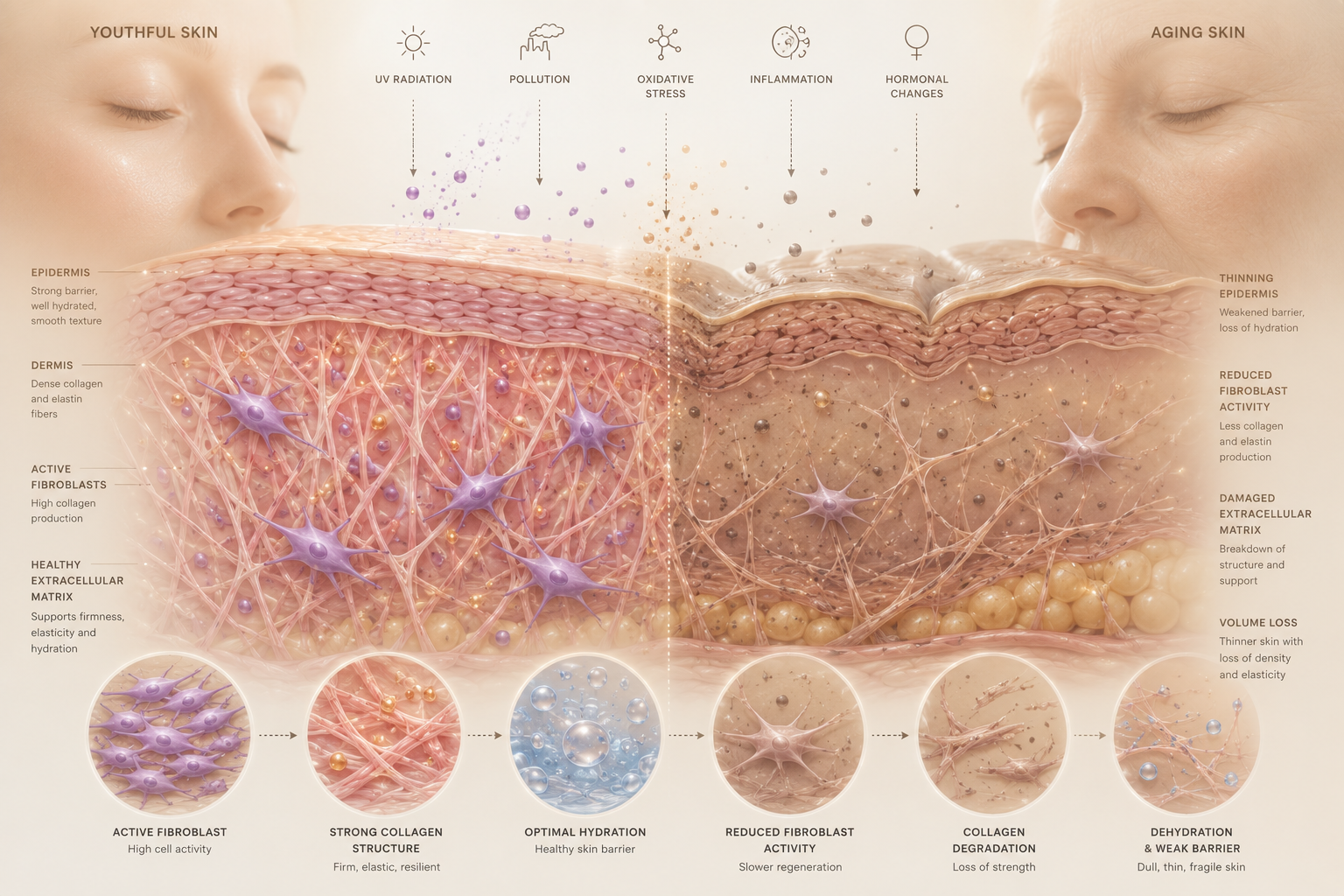 The visible result is not simply wrinkles. Skin may begin to lose firmness and elasticity, appear thinner, drier and less radiant, while fine lines, enlarged pores, uneven texture and slower healing become increasingly noticeable. Instead of renewing itself as efficiently as it once did, the skin enters a state where damage accumulates faster than it can be repaired.
This is where regenerative aesthetic medicine takes a different approach. Rather than simply masking the visible signs of ageing, treatments such as polynucleotides are designed to support the skin’s own biological repair processes. By encouraging fibroblast activity and creating an environment that promotes collagen production, tissue regeneration and improved skin quality, they work with the body’s natural healing mechanisms to restore healthier, stronger and more resilient skin over time.
The Science Behind Skin Regeneration
Healthy skin is constantly renewing itself through a highly coordinated process of cellular repair and regeneration. Every day, millions of skin cells are replaced while specialised fibroblasts produce collagen, elastin and hyaluronic acid to maintain the skin’s strength, elasticity and hydration. At the same time, the extracellular matrix provides the structural framework that supports healthy cell communication, nutrient delivery and tissue repair. When these biological processes function efficiently, the skin remains smooth, resilient and naturally radiant despite continuous exposure to environmental stress.
As we age, however, the skin’s regenerative capacity gradually declines. Fibroblasts become less active, collagen and elastin production slow, and the extracellular matrix begins to lose its organisation and strength. Daily exposure to ultraviolet (UV) radiation, pollution, oxidative stress, inflammation and lifestyle factors accelerates this process by creating microscopic damage that the skin can no longer repair as efficiently. Over time, these cumulative changes contribute to fine lines, reduced elasticity, dehydration, uneven texture, enlarged pores and a gradual loss of firmness and luminosity.
Polynucleotides work differently from traditional aesthetic treatments because they focus on restoring the skin’s natural regenerative environment rather than simply correcting visible signs of ageing. Following treatment, highly purified DNA fragments support the skin’s biological healing response by encouraging fibroblasts to become more active while creating optimal conditions for tissue repair. Instead of replacing collagen or adding volume, they stimulate the body’s own regenerative processes, allowing the skin to rebuild itself naturally from within.
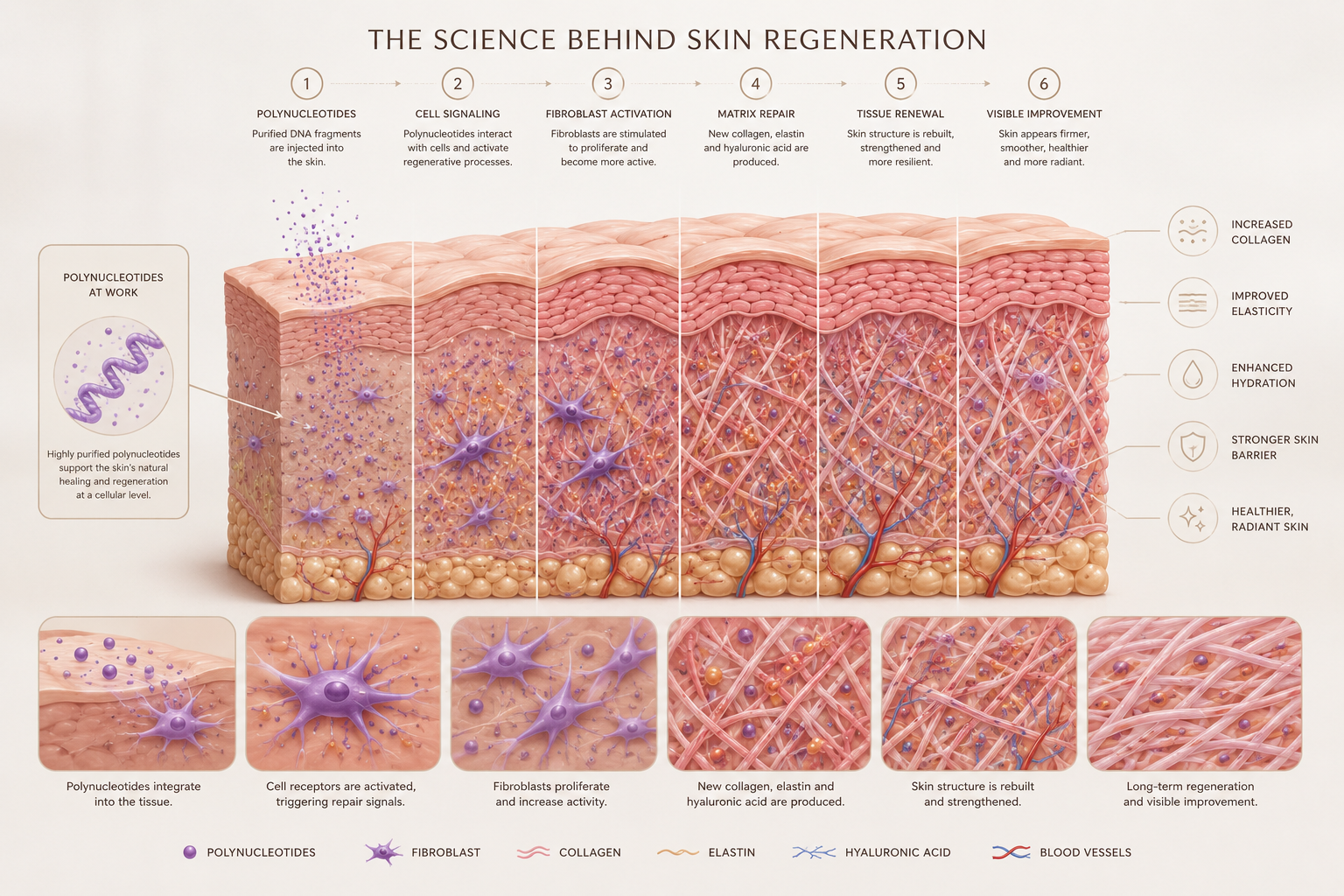
This biological cascade extends far beyond collagen stimulation alone. As fibroblast activity increases, new collagen and elastin fibres are produced, while the extracellular matrix becomes healthier and more organised. At the same time, hydration improves through increased hyaluronic acid production, microcirculation delivers oxygen and nutrients more efficiently, and the skin’s protective barrier becomes stronger. Polynucleotides also help create a balanced healing environment by supporting normal tissue repair and reducing the effects of oxidative stress, allowing healthier cellular communication throughout the dermis.
Unlike treatments that produce an immediate cosmetic change, polynucleotides deliver progressive improvements as the skin continues its natural renewal cycle over several weeks. Each stage of regeneration builds upon the last, resulting in healthier tissue architecture, stronger collagen networks and improved overall skin function. Because the skin is repairing itself rather than being artificially altered, results develop gradually and appear exceptionally natural.
The result is healthier, firmer and more resilient skin with improved texture, elasticity, hydration and radiance. Rather than targeting a single concern, polynucleotide treatments enhance the overall quality of the skin by restoring the biological processes responsible for long-term skin health. This regenerative approach has made polynucleotides one of the most advanced innovations in modern regenerative aesthetic medicine, regenerative aesthetic medicine skin regeneration, collagen production, skin quality and cellular repair through the body’s own natural healing mechanisms.
Benefits of Polynucleotide Treatments
Polynucleotide treatments offer far more than temporary cosmetic improvements. Unlike traditional aesthetic procedures that primarily address visible signs of ageing, polynucleotides work at a cellular level to improve the skin’s natural ability to repair, regenerate and maintain itself over time. By stimulating fibroblast activity and supporting the production of collagen, elastin and hyaluronic acid, they help restore healthier skin structure while delivering gradual, natural-looking improvements that continue to develop after treatment.
One of the most significant benefits is improved skin quality. As the skin regenerates, patients often notice smoother texture, increased hydration and a healthier, more radiant complexion. The skin feels stronger, appears more luminous and develops a naturally refreshed appearance without looking overtreated. Because improvements occur through biological regeneration, results blend seamlessly with the patient’s natural features.
Polynucleotides are also highly effective for improving skin firmness and elasticity. Increased collagen and elastin production strengthens the dermis, helping to reduce skin laxity while improving resilience. Fine lines become softer, skin appears firmer and overall facial contours often look more refined as tissue quality continues to improve. This makes polynucleotides an excellent option for both early prevention and visible skin rejuvenation.
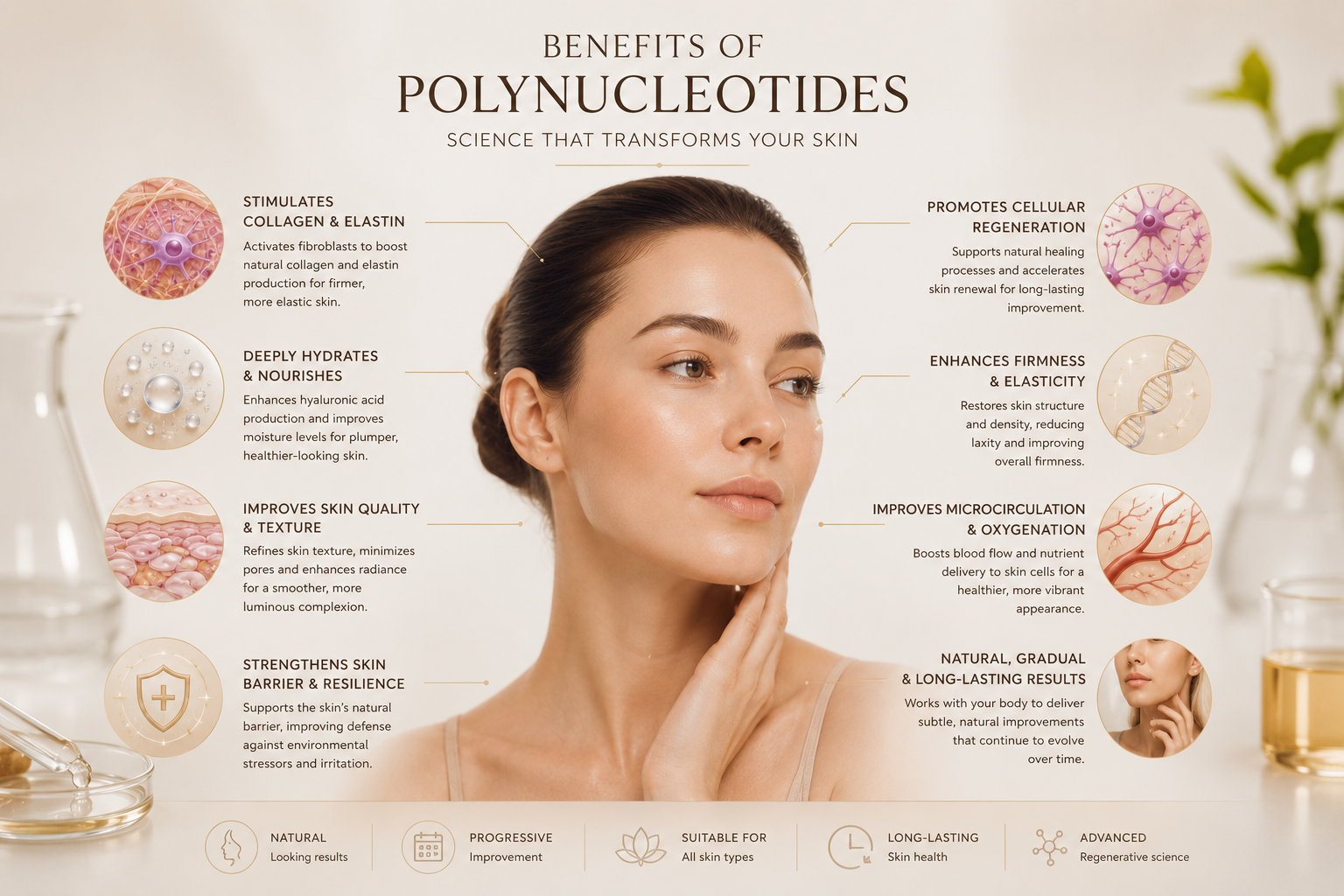 Another important advantage is their ability to support long-term skin health. By strengthening the extracellular matrix, improving hydration and encouraging balanced cellular repair, polynucleotides help create healthier conditions within the skin itself. They also support recovery following environmental damage, oxidative stress and other aesthetic treatments, making them a valuable component of comprehensive regenerative skin programmes. Rather than providing a short-term cosmetic effect, they improve the skin’s ability to function more efficiently over time.
One of the reasons polynucleotides have become increasingly popular in regenerative aesthetic medicine is their remarkable versatility. They can be used to treat the face, neck, décolletage, hands and delicate areas such as around the eyes, where skin is naturally thinner and often shows signs of ageing first. Suitable for a wide range of skin types and ages, they can also complement treatments such as microneedling, laser procedures and other regenerative therapies to enhance overall treatment outcomes.
The result is healthier, stronger and more resilient skin that continues to improve naturally. Rather than simply masking imperfections, polynucleotide treatments restore the biological foundations of youthful skin by supporting cellular repair, skin regeneration, collagen production and overall skin quality. For patients seeking subtle, long-lasting and scientifically backed skin rejuvenation, polynucleotides represent one of the most advanced regenerative treatments available today.
Who Is a Good Candidate for Polynucleotide Treatments?
One of the greatest advantages of polynucleotide treatments is their versatility. Unlike treatments designed to address a single concern, polynucleotides work by improving the skin’s natural ability to repair and regenerate itself. This makes them suitable for a wide range of patients, from those looking to prevent the early signs of ageing to individuals seeking advanced skin rejuvenation or recovery following environmental damage and previous aesthetic procedures.
Polynucleotides are an excellent option for anyone experiencing a gradual decline in skin quality, including reduced firmness, dehydration, dullness, fine lines, uneven texture or loss of elasticity. They are particularly beneficial for patients who want healthier, stronger and more radiant skin without altering their natural facial features. Because the treatment stimulates your body’s own regenerative processes, results develop gradually and maintain a beautifully natural appearance.
These treatments are also ideal for younger patients who wish to take a preventative approach to skin ageing. Supporting collagen production and fibroblast activity before significant collagen loss occurs can help preserve skin structure, improve resilience and maintain a youthful complexion for longer. Increasingly, polynucleotides are being incorporated into long-term skin health programmes as part of a proactive approach to regenerative aesthetic medicine rather than waiting until visible signs of ageing become more advanced.
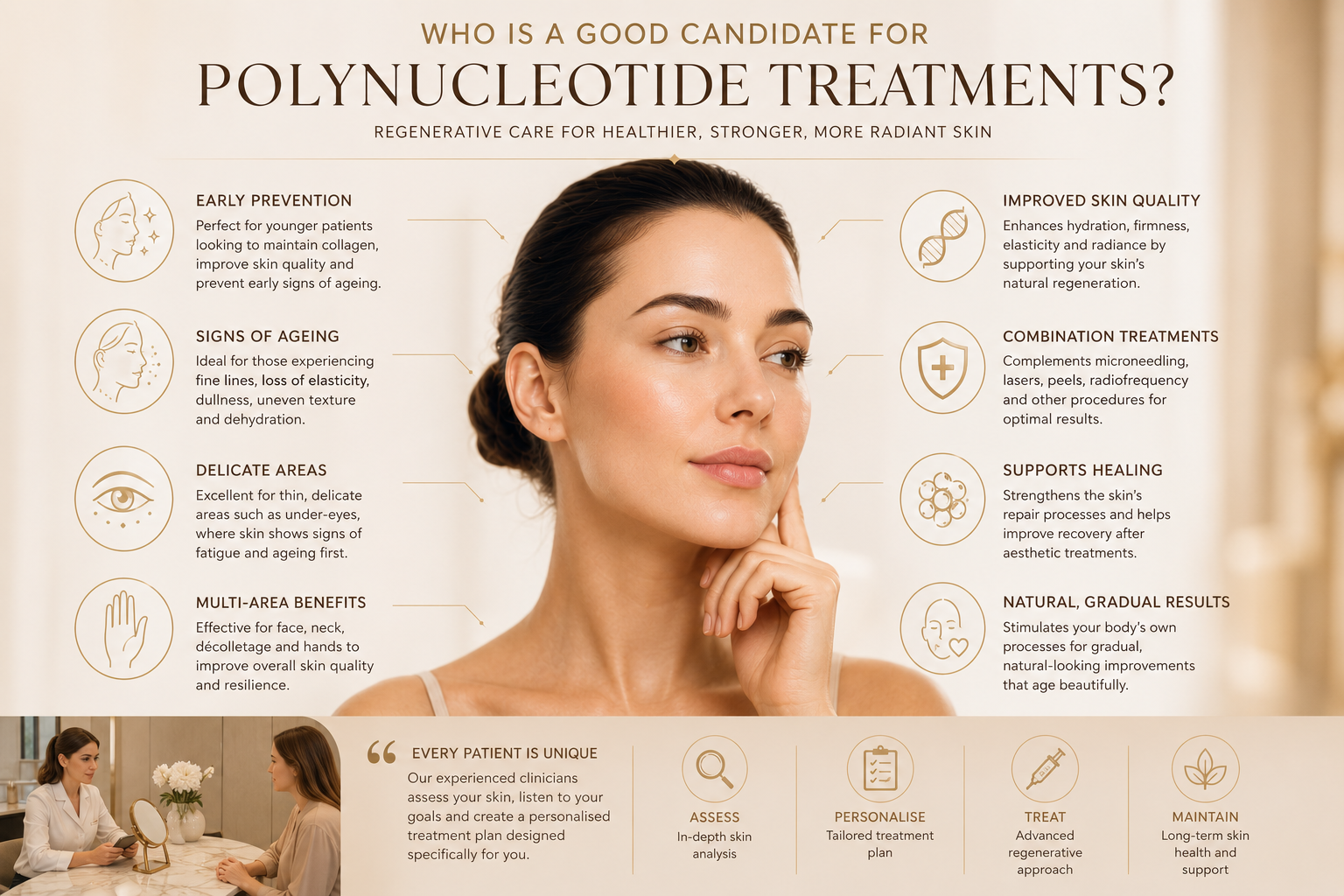 For patients with more mature skin, polynucleotides can help improve tissue quality where natural regenerative capacity has slowed. They are commonly used to address delicate areas such as the under-eye area, where thinning skin, fine lines and crepey texture are often difficult to treat. They are equally effective on the face, neck, décolletage and hands, helping improve hydration, elasticity and overall skin quality across multiple treatment areas.
Polynucleotides are also highly valued as part of combination treatment plans. By strengthening the skin’s biological foundation, they can complement procedures such as microneedling, laser treatments, chemical peels, radiofrequency, skin boosters and other regenerative therapies. Improving the skin’s healing response before or after these procedures may enhance overall skin quality while supporting a healthier recovery process. At Privé Skin Clinic, every treatment plan is individually tailored to your skin condition, concerns and long-term aesthetic goals, ensuring the most appropriate combination of therapies for natural, balanced results.
Ultimately, the ideal candidate is someone who wants to improve skin health, not simply conceal the visible signs of ageing. Whether your goal is prevention, rejuvenation or maintaining naturally beautiful skin, polynucleotide treatments provide a scientifically backed solution that supports collagen production, cellular repair and long-term skin regeneration. Through a personalised consultation, our experienced clinicians assess your skin in detail before creating a bespoke treatment plan designed around your unique needs, helping you achieve healthier, stronger and naturally radiant skin with confidence.
Frequently asked questions
What are polynucleotides?
Polynucleotides are highly purified DNA fragments that stimulate the skin’s natural repair processes. Rather than adding volume or relaxing muscles, they encourage fibroblasts to produce new collagen, elastin and hyaluronic acid, helping improve skin quality, hydration and long-term regeneration.
How do polynucleotide treatments work?
Polynucleotides work by supporting the skin’s natural healing response. After treatment, they activate fibroblasts, improve cellular communication and create an environment that encourages collagen production, tissue repair and skin regeneration. Results develop gradually as your skin naturally renews itself.
What skin concerns can polynucleotides treat?
Polynucleotide treatments are suitable for a wide range of concerns, including fine lines, loss of skin elasticity, dehydration, dull skin, uneven texture, enlarged pores, crepey skin and overall skin ageing. They are also commonly used to improve delicate areas such as the under-eye region, neck, décolletage and hands.
Are polynucleotides better than skin boosters?
Although both treatments improve skin quality, they work differently. Skin boosters primarily increase hydration by delivering hyaluronic acid, while polynucleotides focus on stimulating the skin’s own regenerative processes, encouraging collagen production, fibroblast activation and long-term tissue repair. During your consultation, our clinicians will recommend the most suitable treatment based on your skin concerns and goals.
How many polynucleotide treatments will I need?
Most patients benefit from a course of three treatments, typically performed every 2–4 weeks, depending on the treatment area and your individual skin condition. Your clinician will create a personalised treatment plan designed around your skin, lifestyle and desired results.
When will I see results from polynucleotide treatments?
Because polynucleotides stimulate natural skin regeneration, results appear gradually rather than immediately. Many patients notice improvements in hydration and skin radiance within a few weeks, while collagen production and skin quality continue to improve over the following months.
How long do the results last?
Results vary depending on your skin, age and lifestyle, but improvements commonly last 6–12 months. Regular maintenance treatments, combined with a personalised skincare routine and healthy lifestyle, can help prolong your results.
Are polynucleotide treatments painful?
Most patients find the treatment very comfortable. A topical numbing cream can be applied before treatment to minimise discomfort, and the procedure is generally well tolerated with little downtime.
What are the possible side effects?
Polynucleotide treatments have an excellent safety profile when performed by experienced medical professionals. Mild redness, swelling, tenderness or small injection marks may occur and usually resolve within a few days. At Privé Skin Clinic, every treatment begins with a comprehensive consultation and personalised treatment plan to ensure the correct product, technique and treatment protocol are selected for your skin, helping minimise the risk of side effects while achieving safe, natural-looking results.
Can polynucleotides be combined with other treatments?
Yes. Polynucleotides are frequently combined with treatments such as microneedling, laser skin resurfacing, radiofrequency, chemical peels and skin boosters. Combining regenerative treatments can improve skin quality while supporting the skin’s natural healing response. Your clinician will recommend the safest and most effective treatment combination for your individual goals.
Who is a good candidate for polynucleotide treatments?
Polynucleotides are suitable for most adults who wish to improve skin quality naturally. They are ideal for patients experiencing early signs of ageing, reduced skin elasticity, dehydration, dullness or loss of firmness, as well as those seeking preventative skin health or regenerative skin rejuvenation.
Why choose Privé Skin Clinic for polynucleotide treatments?
At Privé Skin Clinic, we believe exceptional results begin with understanding your skin rather than treating symptoms alone. Every treatment is tailored following a comprehensive consultation, allowing our experienced clinicians to create a personalised regenerative treatment plan designed around your skin biology, lifestyle and long-term goals. Our focus is always on achieving naturally healthy, balanced and long-lasting results through evidence-based regenerative aesthetic medicine.
Mentioned in this article
Related treatments
Keep reading

Weight Management
Mounjaro for Weight Loss UK: Complete Patient Guide | Privé
Considering Mounjaro for weight loss? Discover how it works, who it’s suitable for, expected results, side effects and everything you need to know before starting treatment with expert clinician-led guidance from Privé.
Injectables
Botox vs Dermal Fillers: Difference Between Botox and Filler
Confused about Botox and dermal fillers? Learn the key differences, how each treatment works, what concerns they treat and which option may be right for your aesthetic goals.
From the clinic
Considering a consultation?
Thirty minutes, complimentary, at our Knightsbridge clinic. We listen first, recommend honestly, and only suggest treatment when it's right for you.